Mushrooms of the Upper Midwest
by Teresa Marrone and Kathy Yerich
Adventure Publication Inc, 2014
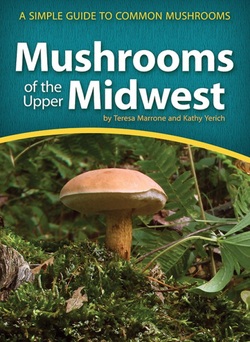
This is a fine, information-packed handbook which will benefit both new and experienced mushroom hunters. Introductory materials provide careful coverage of the mycological science needed for a basic understanding of fungi and their world. This includes: nature of mushrooms, mushroom structure, stages of growth, the role played by mushrooms in the environment and the matter of safe eating.
Layout of pages dealing with individual species is nicely organized, with an initial comment on habitat, followed by a clear, detailed description of the mushroom. In addition, there are important notes on spore color, look-a likes and other facts. Excellent color photos are on the facing pages.
Very helpful for the beginner are the two sections; Top Edibles and Top Toxics. The first presents enough easily identified edibles to satisfy the mushroomer looking for table fare. The second presents important facts about the poisonous mushrooms which hunters are likely to encounter, mushrooms to be handled with caution and never eaten.
One negative: This book is an ambitious undertaking covering nearly 400 species, its detailed descriptions, accompanying notes and photos. The decision to present this large quantity of informative material in a 4 ½ by 6 inch pocket -size volume requires compression of the materials into a very small space. Reduced print size and light print tone may, for some, be a problem, especially when in the field. Photos too are necessarily small. It seems perhaps too much material for the field and a book one might prefer to ponder and profit from at home.
. Review by C. Mollen
Adventure Publication Inc, 2014
This is a fine, information-packed handbook which will benefit both new and experienced mushroom hunters. Introductory materials provide careful coverage of the mycological science needed for a basic understanding of fungi and their world. This includes: nature of mushrooms, mushroom structure, stages of growth, the role played by mushrooms in the environment and the matter of safe eating.
Layout of pages dealing with individual species is nicely organized, with an initial comment on habitat, followed by a clear, detailed description of the mushroom. In addition, there are important notes on spore color, look-a likes and other facts. Excellent color photos are on the facing pages.
Very helpful for the beginner are the two sections; Top Edibles and Top Toxics. The first presents enough easily identified edibles to satisfy the mushroomer looking for table fare. The second presents important facts about the poisonous mushrooms which hunters are likely to encounter, mushrooms to be handled with caution and never eaten.
One negative: This book is an ambitious undertaking covering nearly 400 species, its detailed descriptions, accompanying notes and photos. The decision to present this large quantity of informative material in a 4 ½ by 6 inch pocket -size volume requires compression of the materials into a very small space. Reduced print size and light print tone may, for some, be a problem, especially when in the field. Photos too are necessarily small. It seems perhaps too much material for the field and a book one might prefer to ponder and profit from at home.
. Review by C. Mollen
Fascinating Fungi of the Northwoods
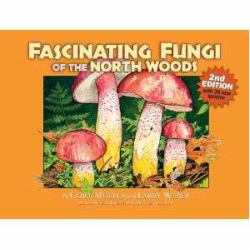
The 2nd edition of Fascinating Fungi of the Northwoods is now available. Users will find it greatly expanded, with 38 additional species descriptions and accompanying images. Also included in this edition are notations regarding edibility of many of the featured mushrooms.
This book is an excellent introduction to the mushroom world. It is packed with information on many topics of interest covering the unique nature fungi, their uses and their environment. Descriptions of individual species can guide in identification of mushrooms found in the Northwoods area.
This book is an excellent introduction to the mushroom world. It is packed with information on many topics of interest covering the unique nature fungi, their uses and their environment. Descriptions of individual species can guide in identification of mushrooms found in the Northwoods area.
Book Reviews
Edible and Medicinal Mushrooms of New England and Canada by David L. Spahr
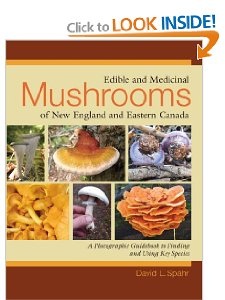
Though this top-notch book by David L. Spahr is titled Edible and Medicinal Mushrooms of New England and Canada, everything in it can be applied to mushroom hunting in our Northwoods area. The book can serve as an excellent introduction to edibles frequently found here. It can be recommended for its detailed descriptions presented in a very clear, readable style. Photographs accompanying each species are outstanding. Several shots from varied angles emphasize structural features important in identification.
The book covers 20 edible mushrooms with some related varieties. Most commonly occur in our woodlands. Each mushroom is given considerable attention with pertinent details of appearance, structure and expected habitat. Cautions are provided specific to identification of each species. Suggestions for cooking and other uses are included.
Five medicinal mushroom species are discussed. All are common to our area. There are detailed descriptions, photos and comment on their health benefits.
In addition this book provides chapters on the experience of mushrooming, the general rules for mushroom gathering and consumption, useful tools, and recommended techniques for mushroom photography.
This is a fine book for beginners as well as seasoned mushroomers.
Note: If you are interested in the subject of yarn, fabric or paper dyeing, Spahr includes information on the use of featured species in the dyeing process, resulting color and an appropriate mordant.
Though this top-notch book by David L. Spahr is titled Edible and Medicinal Mushrooms of New England and Canada, everything in it can be applied to mushroom hunting in our Northwoods area. The book can serve as an excellent introduction to edibles frequently found here. It can be recommended for its detailed descriptions presented in a very clear, readable style. Photographs accompanying each species are outstanding. Several shots from varied angles emphasize structural features important in identification.
The book covers 20 edible mushrooms with some related varieties. Most commonly occur in our woodlands. Each mushroom is given considerable attention with pertinent details of appearance, structure and expected habitat. Cautions are provided specific to identification of each species. Suggestions for cooking and other uses are included.
Five medicinal mushroom species are discussed. All are common to our area. There are detailed descriptions, photos and comment on their health benefits.
In addition this book provides chapters on the experience of mushrooming, the general rules for mushroom gathering and consumption, useful tools, and recommended techniques for mushroom photography.
This is a fine book for beginners as well as seasoned mushroomers.
Note: If you are interested in the subject of yarn, fabric or paper dyeing, Spahr includes information on the use of featured species in the dyeing process, resulting color and an appropriate mordant.
Chanterelle Dreams, Amanita Nightmares by Greg A.
Marley
Greg Marley writes in an easy, flowing prose that makes for pleasurable reading. While taking a serious approach to the topic of mushrooms, he adds enough humor to, now and then, add a light note to the text. The book’s subtitle, The Love, Lore and Mystique of Mushrooms, nicely sums up what the author intends to offer the reader. The book contains an enriching mix of history, culture and scientific information
The opening chapters deal with cultural attitudes toward mushrooms. They focus on Russian and Slavic appreciation and passion for mushrooms and the contrasting distrust and fear of mushrooms that, for a long time, permeated the thinking in some cultures, Anglo-Americans among them.
There is a discussion of mushrooms as food. It features the famous “Fool- proof Four” This fungal foursome was promoted by American mycologist Clyde Christensen as very safe, easily identified species. The four include the Chanterelle, Sulfur Shelf, Shaggy Mane and the Puff ball. This section of the book presents excellent portraits of the four and also a thorough look at Boletus edulis (“King Bolete” in the USA), a mushroom well-known and happily consumed worldwide. Recipes are an added bonus in this portion of the book.
Coverage of the topic of mushroom poisoning provides detailed descriptions of those of major concern; the Amanitas, Paxillus and Galerina species, and the False Morel There is coverage of hallucinogenic species as well.
Marley also tackles the important matter of mushrooms’ role in the environment. There is comment, too, on the phenomenon of fairy rings and fungal luminescence. The potential for growing mushrooms in your garden is also considered.
This is a satisfying book. It treats its subjects with clarity and care. Readers will find real enlightenment in Marley’s detailed, well-crafted descriptions of the species featured in the book. Color photos are included.
rating *****
(reviewed by C. Mollen)
Greg Marley writes in an easy, flowing prose that makes for pleasurable reading. While taking a serious approach to the topic of mushrooms, he adds enough humor to, now and then, add a light note to the text. The book’s subtitle, The Love, Lore and Mystique of Mushrooms, nicely sums up what the author intends to offer the reader. The book contains an enriching mix of history, culture and scientific information
The opening chapters deal with cultural attitudes toward mushrooms. They focus on Russian and Slavic appreciation and passion for mushrooms and the contrasting distrust and fear of mushrooms that, for a long time, permeated the thinking in some cultures, Anglo-Americans among them.
There is a discussion of mushrooms as food. It features the famous “Fool- proof Four” This fungal foursome was promoted by American mycologist Clyde Christensen as very safe, easily identified species. The four include the Chanterelle, Sulfur Shelf, Shaggy Mane and the Puff ball. This section of the book presents excellent portraits of the four and also a thorough look at Boletus edulis (“King Bolete” in the USA), a mushroom well-known and happily consumed worldwide. Recipes are an added bonus in this portion of the book.
Coverage of the topic of mushroom poisoning provides detailed descriptions of those of major concern; the Amanitas, Paxillus and Galerina species, and the False Morel There is coverage of hallucinogenic species as well.
Marley also tackles the important matter of mushrooms’ role in the environment. There is comment, too, on the phenomenon of fairy rings and fungal luminescence. The potential for growing mushrooms in your garden is also considered.
This is a satisfying book. It treats its subjects with clarity and care. Readers will find real enlightenment in Marley’s detailed, well-crafted descriptions of the species featured in the book. Color photos are included.
rating *****
(reviewed by C. Mollen)